
News
Bank of Canada deliberations: rate could need to rise further after October hike
The Bank of Canada's summary of deliberations explains why it raised its rate to 2.5% on October 28 and says further increases could be needed.

Editor, Mortgage Directory
The Bank of Canada's summary of deliberations explains why it raised its rate to 2.5% on October 28 and says further increases could be needed.
Ottawa and the Bank of Canada renewed the 2% inflation target, within a 1% to 3% range, for January 2027 to December 2031.
Budget 2026, tabled November 5, would raise the optional mortgage insurance limit to $1.5 million, expand multi-unit insurance and extend the foreign buyer ban.
The Bank of Canada's Q3 2026 Market Participants Survey, taken before the October hike, shows a median policy rate path of 2.75% by March 2027.
What to ask a real estate lawyer or notary about fees, title, closing funds, adjustments and mortgage documents before your purchase closes.
How standard and collateral mortgage charges differ, why they matter at renewal and for HELOCs, and the questions to ask before you switch lenders.
Employment was little changed in October 2026 and the unemployment rate rose to 6.7%, while 29.7% of Canadians lived in households struggling to meet basic needs.
The Montréal CMA recorded 3,252 home sales in October 2026, down 18% from a year earlier, while active listings rose to 21,817 and plex inventory jumped 25%.
Exports edged up 0.2% in September 2026 while imports fell 0.3%, widening the trade surplus to $5.4 billion. Outside energy and metals, exports fell 5.6%.
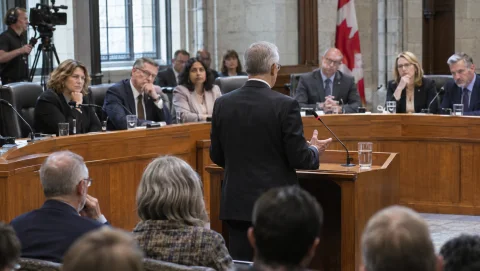
On November 3, 2026, Tiff Macklem told MPs the Bank could need to raise its 2.5% policy rate further, but will proceed carefully. What it means for borrowers.
Statistics Canada's new condo price index fell 0.6% in Q3 2026 and is about 2.5% lower than a year earlier; Montréal and Ottawa rose while B.C. cities fell most.
Metro Vancouver recorded 2,024 sales in October 2026, 22.5% below the 10-year average, and the composite benchmark price fell 5.2% from a year earlier.