
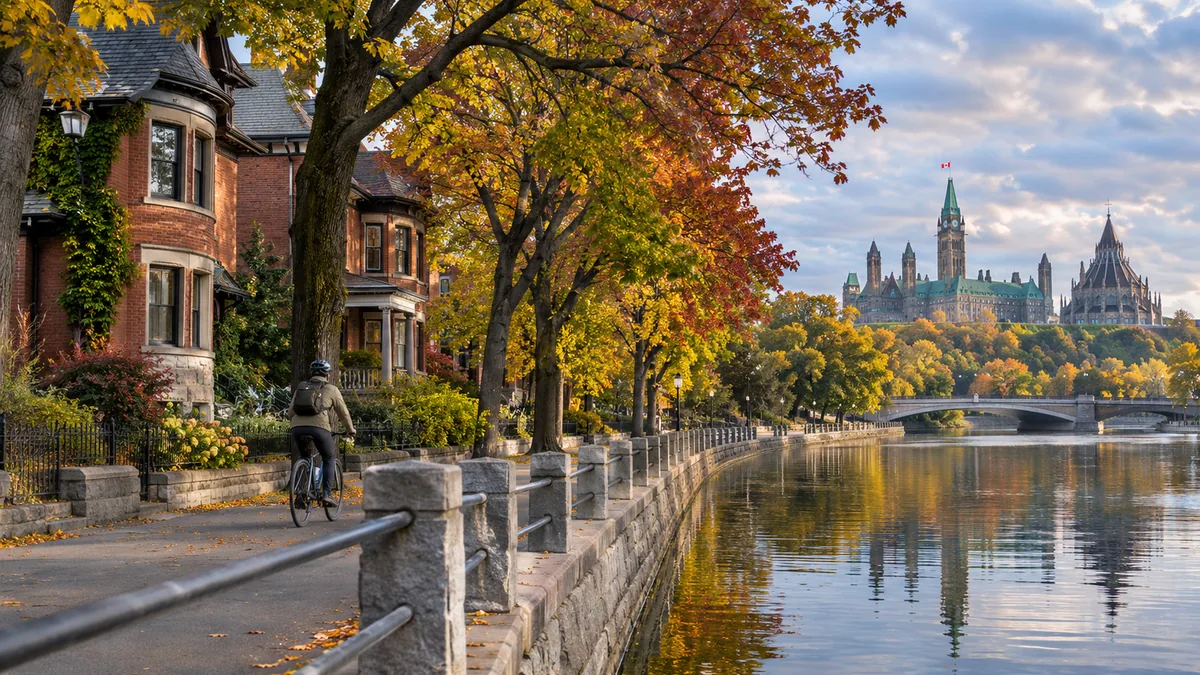
Yes, local knowledge matters when you buy or sell in Ottawa. The city is more varied than many people expect. It has dense downtown condos, established neighbourhoods like the Glebe and Westboro, suburbs such as Kanata, Barrhaven and Orléans, and a large rural area with wells, septic systems and floodplains. A major provincial border sits right across the river.
Mortgage brokers, real estate agents, appraisers and lawyers who live and work here deal with these differences every week. That experience can affect your financing options, the value placed on your home and how smoothly closing goes.
What makes Ottawa's market different
A few local features shape almost every transaction in the national capital:
- A big public-sector workforce. Many buyers work for the federal government. Others work in the Kanata North tech cluster, at the hospitals or at the University of Ottawa and Carleton University.
- A huge city footprint. Since amalgamation in 2001, the City of Ottawa has included rural villages such as Manotick, Carp, Metcalfe and Constance Bay alongside its urban core.
- Weather and water risks. The Ottawa River floods of 2017 and 2019, the 2018 tornadoes in Dunrobin and the 2022 derecho all affected local properties. They also shaped how buyers, insurers and lenders look at certain streets.
- Transit changes. The O-Train light rail network and its extensions have changed commuting patterns. That changes which neighbourhoods buyers are willing to consider.
- Two provinces in one region. Gatineau is across the bridge in Quebec, which has different rules, taxes and closing professionals.
Local mortgage brokers: financing that fits Ottawa borrowers
A mortgage broker licensed in Ontario by the Financial Services Regulatory Authority of Ontario (FSRA) can work anywhere in the province. A broker who regularly closes Ottawa deals, though, tends to know which lenders suit the city's common borrower profiles.
Examples of where local experience helps
- Public servants and term employees. Lenders treat permanent, term and casual positions differently. A broker who sees many federal employment letters can present your income in the way a given lender expects.
- Tech and contract workers in Kanata. Incorporated contractors and people paid partly in stock options or bonuses may need lenders with flexible income policies.
- Parents buying near campus. Families often buy condos or small homes in Sandy Hill or near Carleton for a student. Some lenders have specific "parental co-signing" or rental programs for this.
- Rural purchases. Not every lender finances homes on large acreage, with a well and septic, or near a floodplain. A local broker usually knows which ones will.
- Secondary units. Ontario now allows additional dwelling units on many residential lots. Brokers who see these deals can point you to lenders that count projected rental income.
A local broker also knows when a Gatineau purchase means you need a lender comfortable with Quebec property and its closing process.
Local real estate agents: knowing the street, not just the city
An agent from elsewhere in Ontario can list or show a home in Ottawa. An agent who lives here can usually tell you things a listing will not:
- Which streets in older areas like Vanier, Hintonburg or Old Ottawa South are changing quickly, and which are stable.
- How proximity to an O-Train station, the Rideau Canal or a busy arterial road tends to affect buyer interest.
- Which school catchments, including French-language and French immersion options, matter most to families in a given area.
- Seasonal patterns, such as how listings and showings behave around winter or the spring market.
- Local history, such as past flooding on a river road or a property affected by the 2018 tornadoes.
For sellers, a local agent can price against what has really sold nearby, not just against a citywide average. For buyers, that local feel can help you avoid overpaying in a fast-moving pocket or missing a better-value area a few kilometres away.
Local appraisers: better comparables, fewer adjustments
An appraisal compares your home with recent sales of similar homes nearby. The closer and more similar those sales are, the fewer "adjustments" the appraiser has to make. Fewer adjustments usually mean a more reliable value.
Ottawa shows why this matters:
- Suburban subdivisions in Barrhaven, Stittsville or Orléans often have many similar homes from the same builder. Local appraisers know the model differences and recent sales.
- Older central homes in the Glebe, Westboro or New Edinburgh vary a lot from house to house. Renovations, lot size and heritage status can swing value, so local judgment matters.
- Rural properties may have few recent sales nearby. An appraiser who knows the area can choose sensible comparables from similar villages instead of using suburban sales that do not fit.
- Floodplain and river-access homes along the Ottawa and Rideau rivers need an appraiser who understands how buyers treat those risks.
If an appraisal comes in low, a local appraiser's familiarity with the market can make the report easier for your lender, broker and agent to review.
Local real estate lawyers: closing in your community
In Ontario, a real estate lawyer handles the legal side of buying, selling or refinancing. That includes the title search, mortgage documents, land transfer tax and the transfer of funds. Any lawyer licensed by the Law Society of Ontario can close an Ottawa deal. Local lawyers often bring extra context:
- Knowledge of City of Ottawa zoning, permits and how older additions or basement units are commonly treated.
- Experience with rural issues such as rights-of-way, shared wells, septic certificates and waterfront boundaries.
- Familiarity with condo corporations in the downtown core and their status certificates.
- Awareness that Ottawa, unlike Toronto, does not charge a separate municipal land transfer tax. Buyers pay the Ontario tax, and eligible first-time buyers may qualify for a provincial refund.
Across the river, Quebec closings are generally handled by a notary, not a lawyer. Quebec also charges its own transfer duties, often called the "welcome tax." Someone buying in Gatineau while living in Ottawa should make sure their closing professional is set up for Quebec.
Quick comparison: what each local professional adds
| Professional | Main role | Ottawa-specific value |
|---|---|---|
| Mortgage broker | Matches you with a lender | Public-sector and tech income, rural and campus-area properties |
| Real estate agent | Pricing, marketing, negotiating | Street-level demand, transit access, school catchments |
| Appraiser | Estimates market value for the lender | Closer comparables, flood and rural knowledge |
| Lawyer (or notary in Quebec) | Title, documents, funds, taxes | City zoning, rural title issues, Ontario vs. Quebec rules |
Community life buyers ask about
Buyers moving to Ottawa often want to know what living here is like. Local professionals can speak to it from experience.
- Landmarks and outdoor space. Parliament Hill, the Rideau Canal (a UNESCO World Heritage Site that becomes a skateway in good winters) and the Greenbelt shape where many people want to live.
- Events. Winterlude in February, the Canadian Tulip Festival in May, Ottawa Bluesfest in summer and Canada Day downtown all draw crowds. They can affect traffic, short-term rentals and showings in central areas.
- Food streets. Instead of a single "best restaurant," locals tend to point to districts: the ByWard Market, Preston Street (Little Italy), Somerset Street's Chinatown, Elgin Street, Wellington West and Bank Street in the Glebe. Walking distance to one of these often matters to condo and townhouse buyers.
- Bilingual neighbourhoods. Areas such as Orléans and Vanier have strong francophone communities, which matters to many families.
Ottawa's housing affordability pressure
Like many Canadian cities, Ottawa faces housing affordability and supply challenges. The city declared a housing and homelessness emergency in 2020. Rents, prices and vacancy rates have shifted with interest rates, immigration, public-sector work arrangements and new construction.
Because these numbers change often, check the current figures at the source. The Ottawa Real Estate Board publishes monthly sales and price data. CMHC's annual Rental Market Report covers Ottawa vacancy and rents. The City of Ottawa publishes updates on its housing plans. A local broker or agent can help you understand how those trends relate to your own budget and neighbourhood.
How to choose local professionals
- Ask how many deals they closed in your target area in the past year.
- Ask for examples similar to yours, such as rural, condo, Gatineau or rental-unit properties.
- Confirm licensing: FSRA for brokers, the Real Estate Council of Ontario for agents, and the Law Society of Ontario for lawyers.
- Ask how they communicate and who else is on their team.
This article is general information, not financial or legal advice. Every deal is different, and outcomes are never guaranteed.
If you are planning a move in or around Ottawa, browse the mortgage brokers listed on Mortgage Directory and start with a short conversation about your plans.