
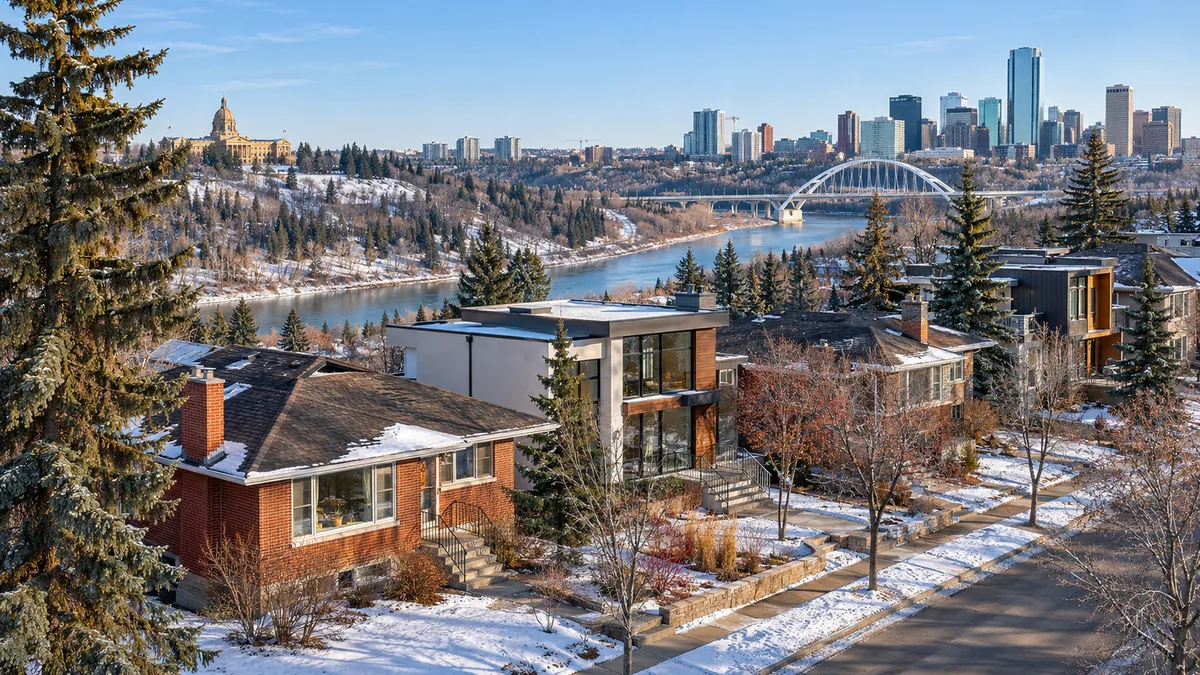
Yes, working with professionals who know Edmonton can make a real difference. Edmonton is not one market. A 1950s bungalow in Westmount, a new skinny infill on the same block, a 1980s condo in Oliver, a new build in a southwest suburb and an acreage just outside city limits are financed, valued, marketed and closed differently. A mortgage broker, realtor, appraiser and lawyer who work here every day are more likely to spot those differences early, before they turn into delays or surprises.
This guide explains what each local professional brings, with Edmonton examples, plus a look at the neighbourhoods, transit changes and housing pressures that shape the city's market.
Why Edmonton's market rewards local knowledge
Edmonton's housing is shaped by a few things that out-of-town professionals can miss:
- The river valley. The North Saskatchewan River valley and its ravines run through the city. Homes on or near the valley edge, such as in Glenora, Crestwood or along Saskatchewan Drive, can carry a premium, and some lots raise slope or setback questions.
- Infill under new zoning. Edmonton's renewed zoning bylaw took effect on January 1, 2024, and broadly allows more housing types, such as rowhouses and small multi-unit buildings, on many lots in mature neighbourhoods. That has changed what buyers and builders can do with older properties.
- Transit expansion. The Valley Line Southeast LRT opened in late 2023, linking downtown with Mill Woods. The Valley Line West extension toward Lewis Farms is under construction. Being near a station can affect demand and value, and construction can affect a street for a while.
- A wide mix of property types. Older condos, new suburban detached homes, homes with basement or garden suites, and acreages in surrounding counties all appear in the same regional market.
For current prices and sales, check the monthly statistics from Edmonton's local real estate board and the market reports published by CMHC, rather than relying on figures quoted secondhand.
Local mortgage brokers: matching lenders to Edmonton properties and borrowers
In Alberta, mortgage brokers and real estate agents are licensed by the Real Estate Council of Alberta (RECA). A broker who works in Edmonton regularly tends to know which lenders are comfortable with which local situations. Examples:
- Older condo buildings. Some Edmonton condo buildings have faced large repair bills or special assessments. Lenders review condo documents and may be cautious about buildings with thin reserve funds. A local broker may already know how particular lenders treat certain building types and can steer you early.
- Homes with suites. With garden suites and basement suites now more common, many buyers want rental income counted toward qualifying. Lenders treat suite income differently, and a broker can compare those policies.
- Energy-sector and rotational workers. Many Edmonton-area households earn income from oil and gas, construction or camp-based work, which can include overtime, bonuses or contract periods. Lenders differ in how they average variable income.
- New builds in growing suburbs. Buying in a new community in the southwest, southeast or north often means choosing between a completion mortgage and a progress-draw mortgage for a custom build. Rate holds and closing timelines matter here.
- Acreages. Properties in counties around the city may have wells, septic systems and larger land parcels. Not every lender finances these on the same terms.
- Students, university staff and military families. Buyers connected to the University of Alberta or CFB Edmonton may have specific timing or relocation needs.
A local broker cannot guarantee approval or a rate, but knowing how lenders approach these situations can save time.
Local realtors: pricing street by street
Two homes a few blocks apart in Edmonton can attract very different buyers. A realtor who lives and works here can explain things a provincial search portal cannot:
- How an original bungalow compares with new infill on the same street in McKernan, Highlands or Parkallen.
- Whether a condo near the Ice District or Oliver is likely to appeal to downtown workers, and how condo fees compare with similar buildings.
- How proximity to an LRT station, a school, Whyte Avenue or a major road affects buyer interest.
- Which suburban areas, such as Windermere, Summerside or Terwillegar, have new competing inventory from builders that can affect resale pricing.
For sellers, local agents often know which features Edmonton buyers ask about, such as garages for winter, basement development and furnace or roof age. For buyers, they can help judge whether an offer needs conditions like financing and inspection to protect you, without overpaying in a hot pocket of the city.
Local appraisers: better comparables, fewer adjustments
An appraisal compares your home with recent sales of similar properties. The closer and more similar the comparables, the fewer adjustments the appraiser has to make, and the more reliable the estimate tends to be.
An appraiser familiar with Edmonton is more likely to know:
- Which sales in a mature neighbourhood were teardowns bought for land value and which were renovated homes.
- How to value new infill when few true comparables exist on a given block.
- How a ravine or valley-edge lot differs from an interior lot nearby.
- How acreages near the city compare when sales are sparse and spread out.
Appraisers in Canada often hold designations from the Appraisal Institute of Canada, such as AACI or CRA. Remember that when a lender orders an appraisal, the appraiser's client is usually the lender. If the value comes in low, a local broker may be able to discuss options with the lender, though there is no guarantee the value will change.
Local real estate lawyers: Alberta closing rules
In Alberta, a real estate lawyer handles the legal side of buying and selling, including registering title and the mortgage at Alberta Land Titles. A lawyer who regularly closes Edmonton deals will be familiar with:
- Real Property Reports (RPRs). In Alberta, sellers commonly provide an RPR, a survey showing structures on the lot, often with a municipal compliance stamp from the City. Issues like a fence, deck or garage over a property line can come up here.
- Land titles registration fees. Alberta has no land transfer tax, but there are registration fees for the transfer and the mortgage. Your lawyer can estimate these for your purchase.
- Condo documents. Reviewing bylaws, reserve fund studies, minutes and any planned special assessments.
- Acreage and rural matters. Easements, water and septic issues, and county requirements.
- New-build contracts. Builder agreements, deposits and possession dates.
Fees vary, so ask for a written quote that lists disbursements.
Getting to know Edmonton beyond the listing
Where you buy is also about how you want to live. Some local context:
Landmarks and neighbourhoods
- Old Strathcona and Whyte Avenue: a walkable historic district with shops, theatres and the Saturday farmers' market.
- Downtown and the Ice District: home to Rogers Place, the Royal Alberta Museum and condo towers.
- The Alberta Legislature and the Muttart Conservatory: both close to the river valley.
- West Edmonton Mall: a major draw in the west end.
- Fort Edmonton Park: a living history park in the southwest river valley.
Local events
Edmonton calls itself a festival city. Annual highlights include the Edmonton International Fringe Theatre Festival in Old Strathcona, the Edmonton Folk Music Festival, the Heritage Festival and K-Days. Check each festival's website for dates and venues, as they can change.
Where to eat
Rather than a ranked list, since menus, owners and quality change, here are well-known dining areas worth exploring: Whyte Avenue, 124 Street and its surrounding district, Chinatown along 97 Street, and the downtown and Ice District core. Recent reviews from local food writers and neighbours are the best guide to what is good right now.
Edmonton and the housing affordability challenge
Edmonton is often described as more affordable than Toronto or Vancouver, and that has drawn newcomers from other provinces and abroad. That demand has put pressure on rents and on entry-level ownership, and homelessness remains a visible concern. The City's zoning changes, transit expansion and federal and provincial housing programs are all aimed at adding supply, but residents disagree about how quickly infill should change established neighbourhoods.
For buyers, the practical point is that conditions vary by property type and area. For current rents and vacancy, see CMHC's Rental Market Report; for sales and prices, see the local real estate board's monthly figures.
Quick comparison: what each local professional helps with
| Professional | Edmonton-specific help |
|---|---|
| Mortgage broker | Lender fit for older condos, suites, variable income, new builds and acreages |
| Realtor | Block-by-block pricing, infill versus original homes, LRT and school effects |
| Appraiser | Closer comparables, ravine and infill valuation, sparse acreage sales |
| Lawyer | Real Property Reports, Land Titles registration, condo and rural reviews |
This article is general information, not financial or legal advice. Your situation may call for different choices.
A simple next step
If you are planning a move in Edmonton, start by speaking with a licensed local mortgage broker about what you may qualify for. You can browse Edmonton brokers in the Mortgage Directory and check any broker's licence with RECA before you share documents.