The six-month trend in Canadian housing starts fell 1.7% in October 2026 to 246,231 units, according to data released by Canada Mortgage and Housing Corporation (CMHC) on November 17, 2026. The monthly seasonally adjusted annual rate (SAAR) of starts for all areas of Canada was down 2% from September.
- Six-month trend (all areas): 246,231 units, down 1.7% from September.
- Monthly SAAR (all areas): 244,558 units in October, compared with 250,072 in September.
- Actual starts in centres of 10,000 people or more: 21,059 units in October, up 6% from 19,806 in October 2025.
- Year to date (January to October, centres of 10,000+): 192,023 units, down 3% from the same period of 2025.
- Pending starts (permits approved but not yet started, centres of 50,000+): 139,592 units, down 3% month over month.
What the numbers show
CMHC's trend measure is a six-month moving average of the monthly SAAR, which smooths out the large swings that multi-unit projects cause from month to month. The October decline was driven by Ontario, British Columbia and the Atlantic provinces, according to CMHC. Among the three largest metropolitan areas, the trend rose 6% in Montréal and 2% in Vancouver, both on higher multi-unit starts, while Toronto's trend fell 10% as both single-detached and multi-unit starts decreased.
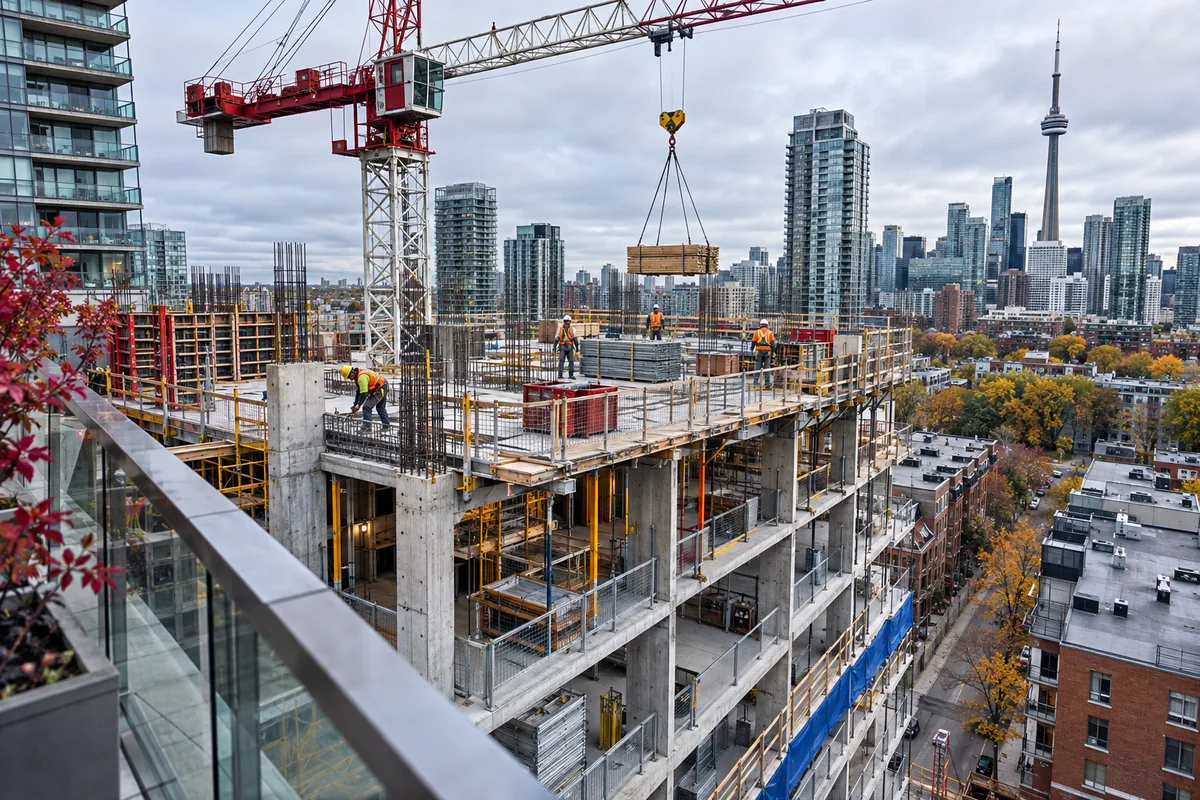
Other construction measures were mixed. Units under construction in centres of 50,000 or more were flat at 369,569, while completions rose 24% from September to 21,621 units. The rural SAAR estimate was 13,675 units.
CMHC's deputy chief economist said in the release that the results signal reduced momentum, that the drop in pending starts suggests some softness in the near-term pipeline, and that under-building during the downturn is a risk for future affordability.
For the previous month's figures, see the September 2026 housing starts report.
What it means for buyers and renters
Our interpretation: Starts measure future supply, not today's prices, so one month's data does not change what a home costs now. A rising number of completions means more new units reaching the market in the near term, which can give buyers of new condos and renters more choice in some cities. A falling pipeline of starts and pending starts points the other way over the next few years, especially in Toronto, where the trend fell most. Conditions differ widely by city and building type.
What to check next
- If you are weighing renting against buying in a market with many new completions, run both scenarios with the rent vs buy calculator.
- Buyers of new construction can ask a local realtor about incentives, assignment rules and how long similar units have been listed.
CMHC will release November housing starts on December 15, 2026.
Sources
- Canada Mortgage and Housing Corporation, Housing starts and construction data for October 2026, 2026-11-17. Accessed 2026-11-18.
General information only, not financial advice.