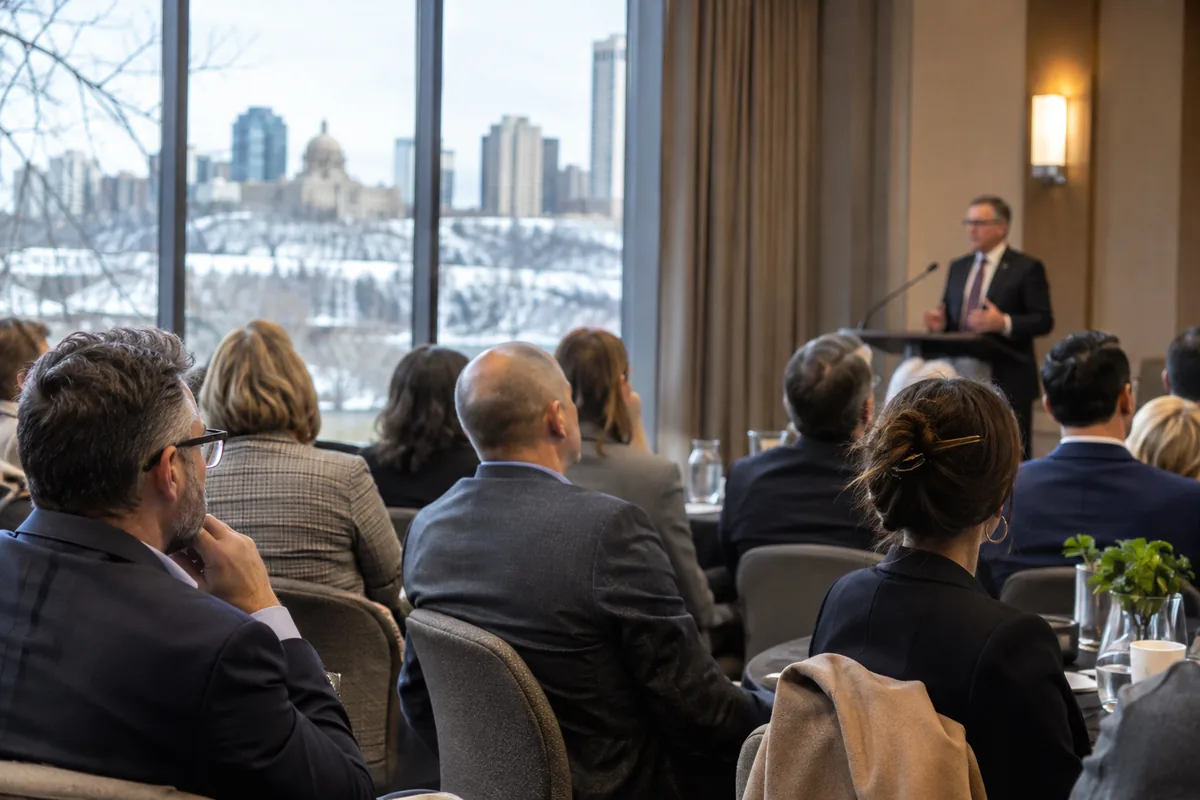
Bank of Canada Deputy Governor Toni Gravelle said on November 18, 2026, that oil prices and inflation have followed the Bank's higher-for-longer oil scenario more closely than its main forecast, a scenario in which repeated interest rate increases were needed. He made the remarks in a speech to the Edmonton Chamber of Commerce about how the Bank uses and communicates economic scenarios.
- Event: speech by Deputy Governor Toni Gravelle, Edmonton, November 18, 2026.
- Bank of Canada policy rate: 2.50%, in effect since the October 28, 2026 decision (Bank of Canada).
- Next scheduled rate announcement: December 9, 2026 (Bank of Canada upcoming events).
What the Deputy Governor said
Gravelle described the Bank's April 2026 outlook. At the time, oil was around $100 a barrel, and the base case assumed it would fall to about $75 by mid-2027, with inflation returning to the 2% target in early 2027. The Bank also published a high oil price scenario. In that scenario, inflation stays close to 3% for more than a year and, in his words, “consecutive policy rate increases are needed” to bring it back to target.
By the October decision, he said, oil prices were still near $100, refinery margins were above historical norms and new US tariffs were adding uncertainty, while the economy was doing better than expected. Oil prices and inflation had tracked the April high-oil scenario more closely than the base case, and the upside risk to inflation identified in April had largely materialized.
Most of the speech explained why the Bank publishes scenarios. Gravelle stressed that scenarios and other forward guidance are conditional: they describe what could happen, not a commitment about what will happen. The speech did not announce or pre-announce a rate decision.
Who is affected
Our interpretation: The remarks add to recent signals, including the Bank's October rate increase, that further increases remain possible if inflation stays high. Borrowers with variable-rate mortgages or home equity lines of credit would feel any change in the policy rate most directly, because their rates are usually tied to lenders' prime rates. Fixed-rate borrowers are not affected until renewal, although fixed rates follow bond yields, which respond to expectations about the Bank's path. Nothing in the speech settles what the Bank will do on December 9.
What to check next
- Variable-rate borrowers can test what a higher rate would do to their payment using the mortgage payment calculator, and review the variable-rate checklist.
- If your term ends within the next several months, compare the cost of renewing early or waiting with the mortgage renewal calculator, and ask your lender or a broker about rate holds.
- Governor Tiff Macklem is scheduled to speak on November 24, 2026, ahead of the December 9 decision, according to the Bank's events calendar.
Sources
- Bank of Canada, Setting the scenario: Monetary policy communications in uncertain times (remarks by Toni Gravelle), 2026-11-18. Accessed 2026-11-19.
- Bank of Canada, Policy interest rate, 2026-10-28. Accessed 2026-11-19.
- Bank of Canada, Upcoming events, 2026-11-19. Accessed 2026-11-19.
This article is general information, not financial advice. Rates and policy can change. Speak with a licensed mortgage professional about your own situation.